
Better questions.
Useful perspectives.
Notes on audience intelligence, measurement and creative work. Practical thinking for a marketing system that learns.
Ideas you can
put to work.
Worked examples use example data, and external references are linked where they are used.
 Measurement / 4 MIN READ
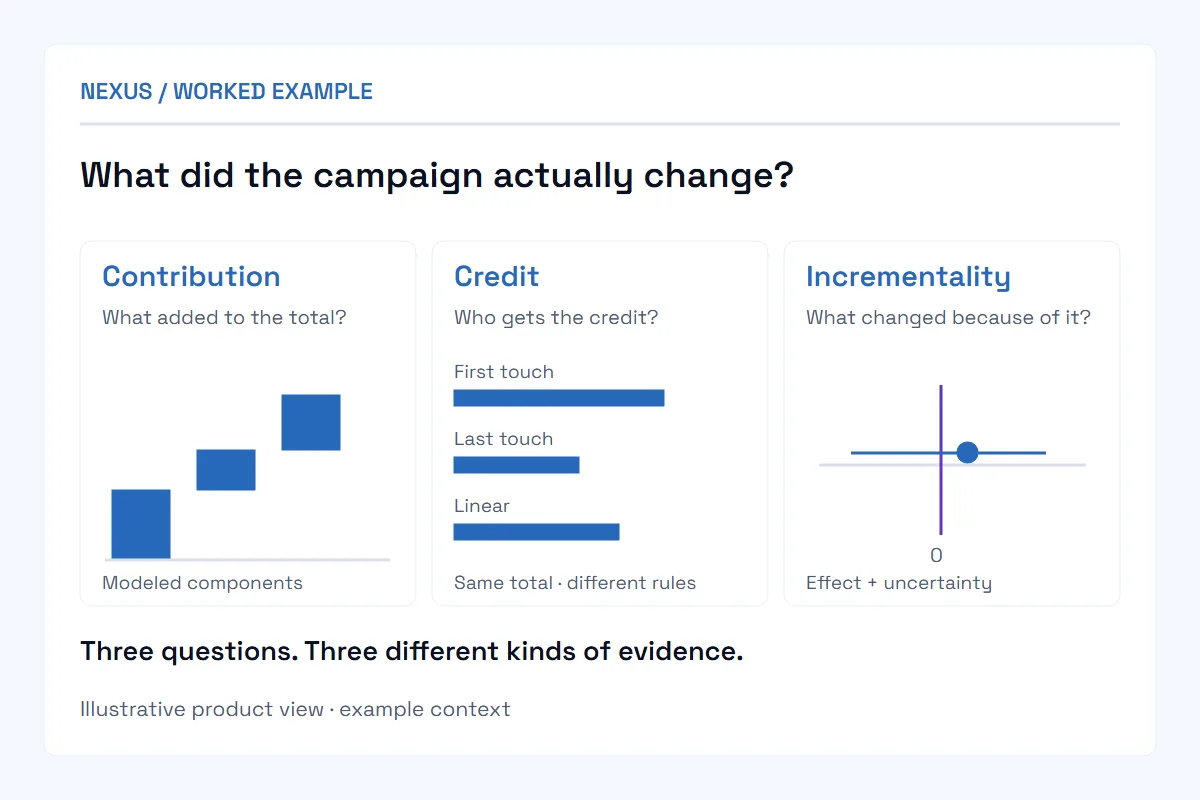
Contribution, credit and incrementality are different questions.
Why three useful measurement views should not collapse into a single performance number.
Read the field note →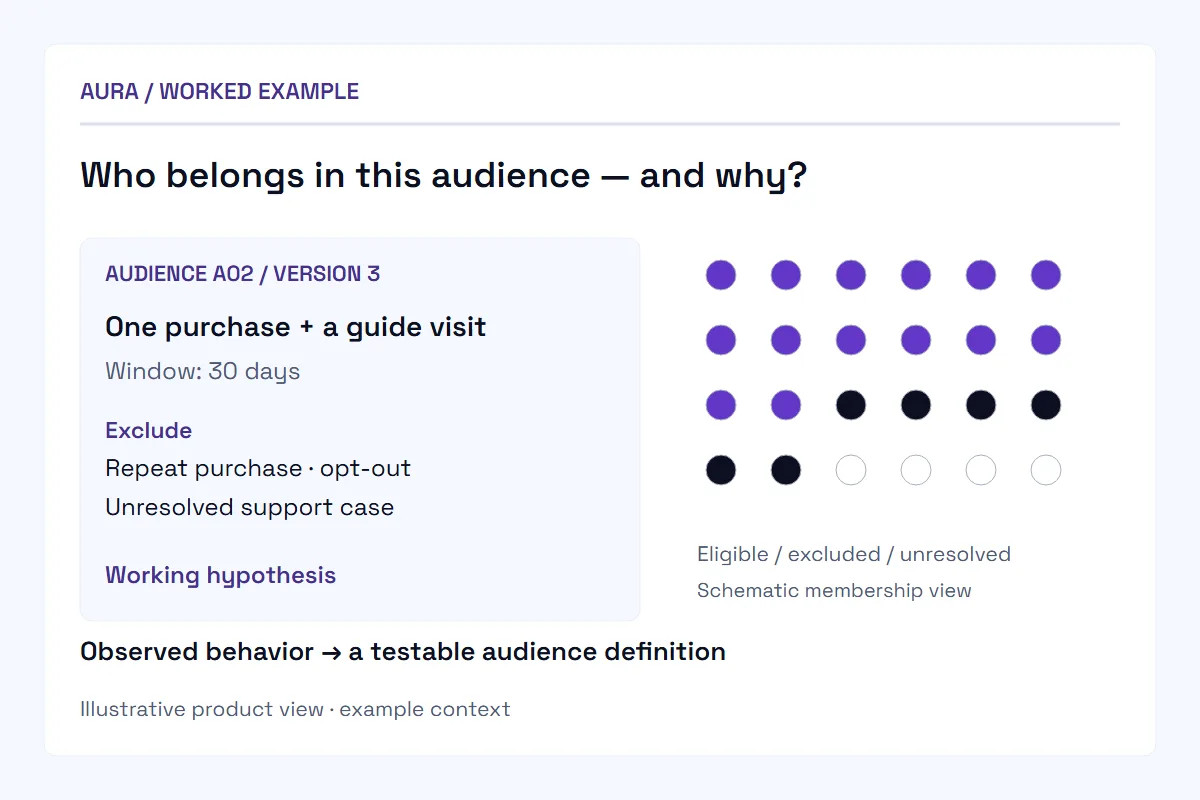 Audience intelligence / 4 MIN READ
An audience is a hypothesis, not a label.
A practical way to connect behavior, context and the next question—without pretending a segment explains a person.
Read the field note →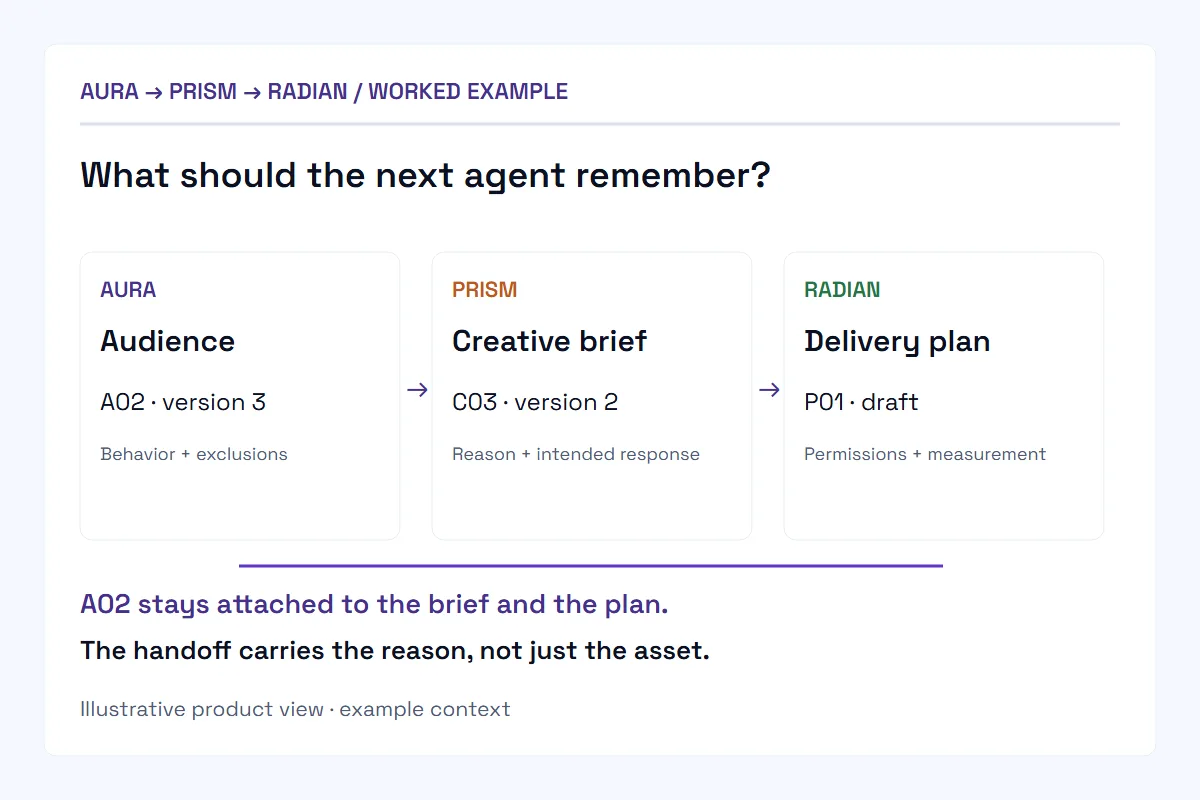 Creative & activation / 3 MIN READ
The creative handoff should remember the audience.
How to keep the reason for a campaign intact as an idea becomes images, video, display and delivery.
Read the field note →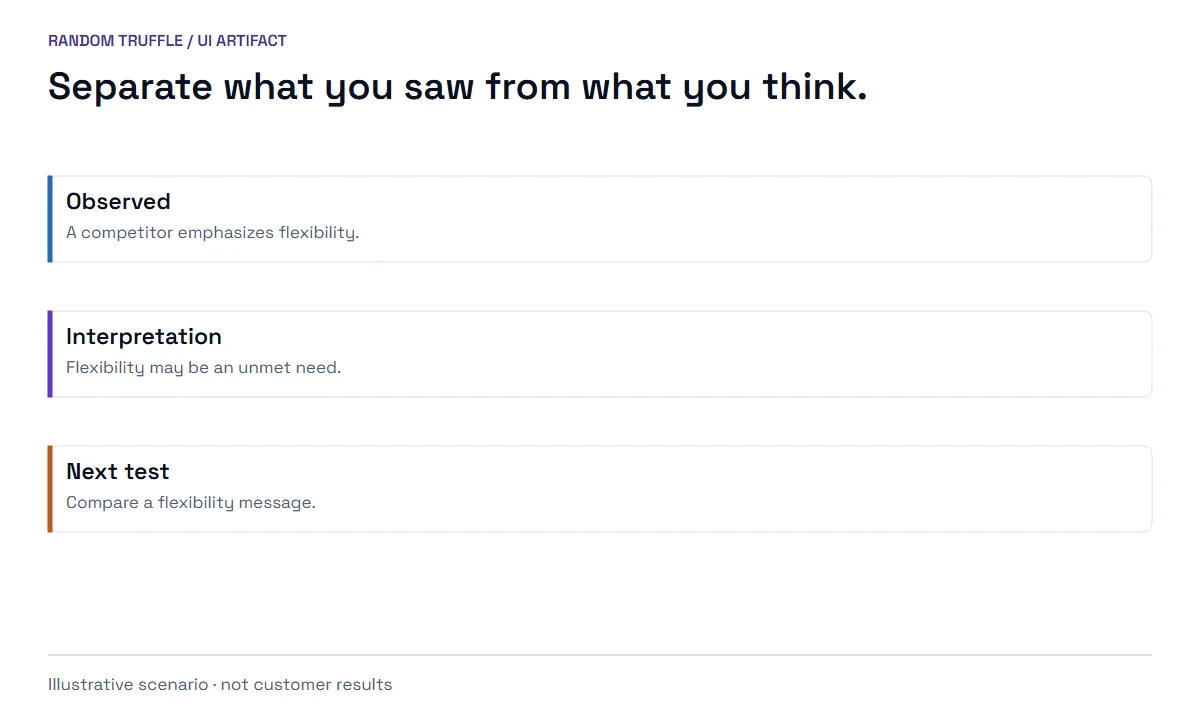 AI & marketing / 8 MIN READ
Measuring your brand’s visibility in AI search
Build a repeatable set of buyer questions, inspect the sources cited and test whether clearer content changes the observed response.
Read the field note →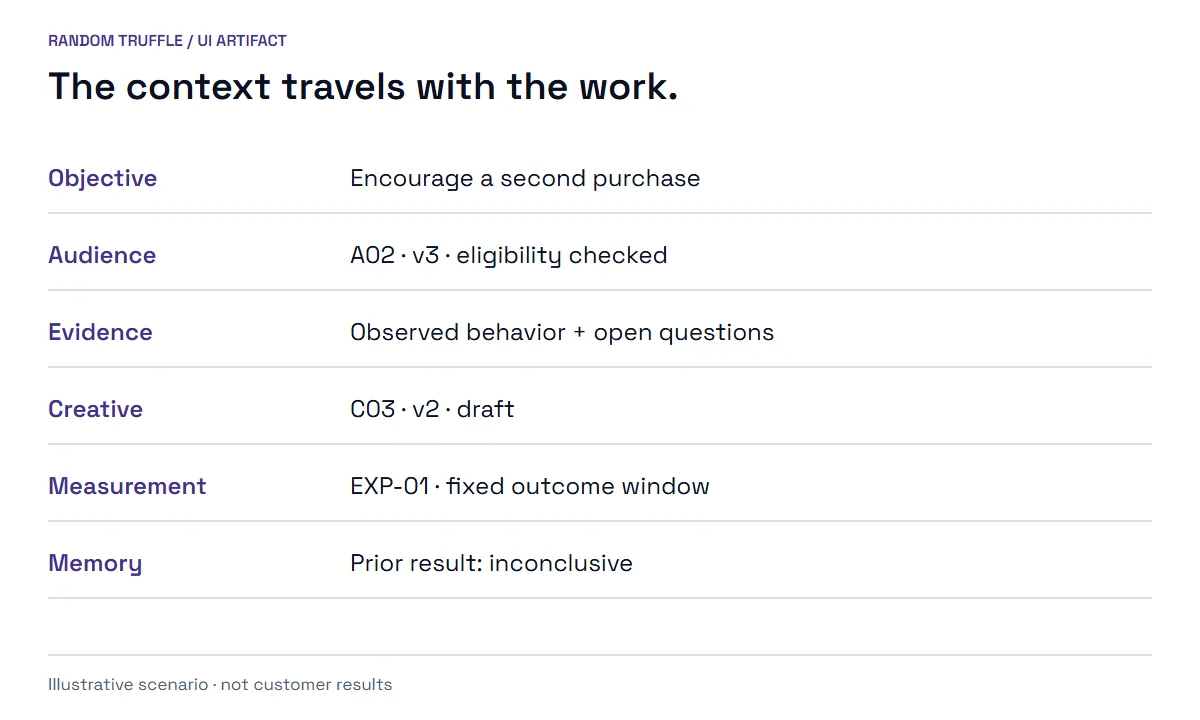 AI & marketing / 4 MIN READ
Give agents a playbook they can use
Keep brand rules and working instructions in reusable skills, with clear versions, owners and review steps.
Read the field note →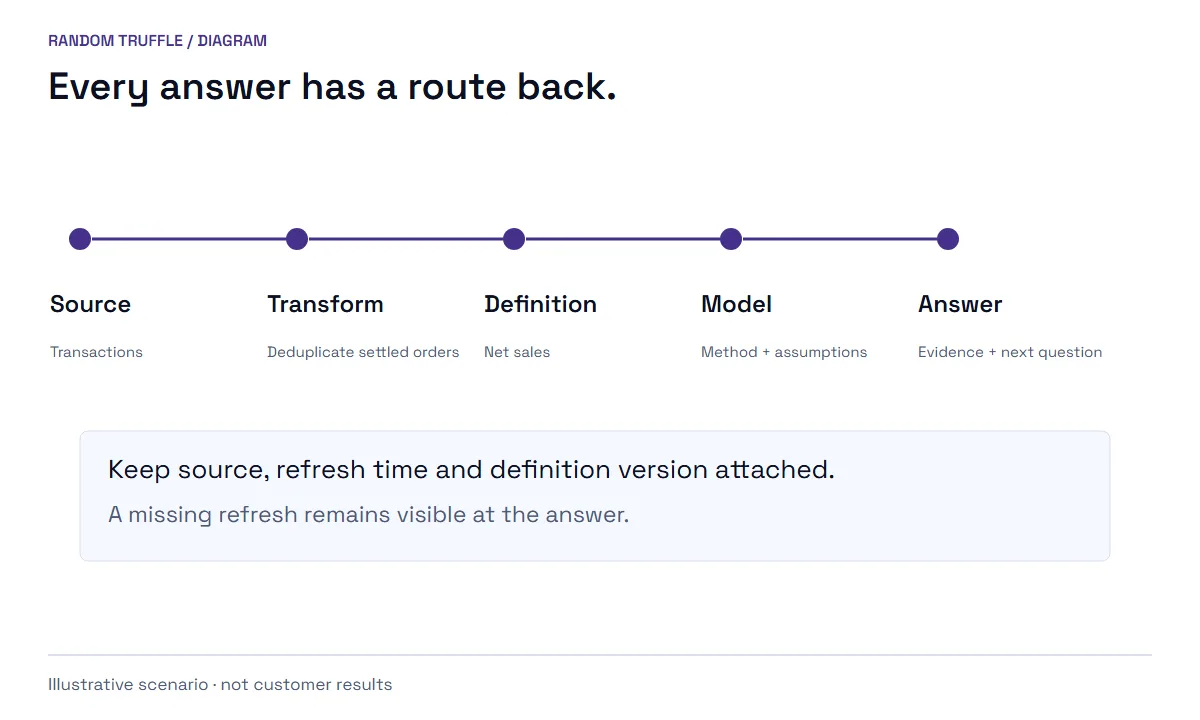 AI & marketing / 9 MIN READ
Useful AI starts with business definitions
Define the customer, conversion and business outcome before asking an agent to act on the data.
Read the field note →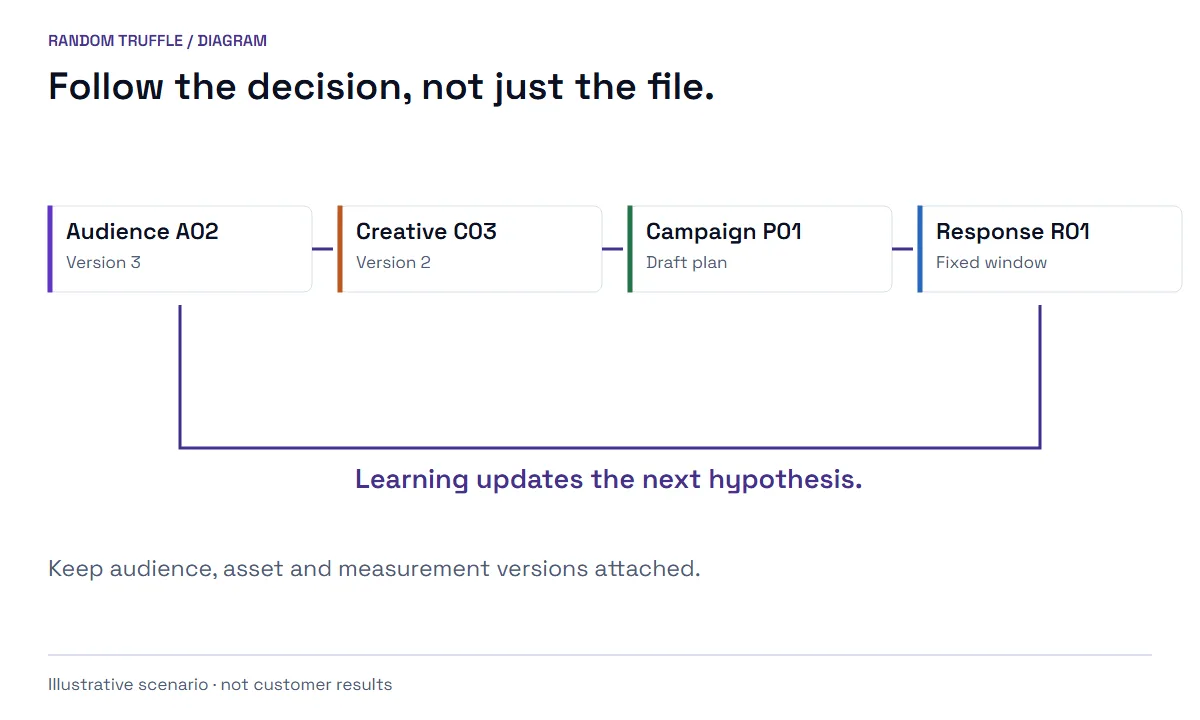 AI & marketing / 6 MIN READ
Keep context intact between teams
Examine where the audience brief, creative decision and measurement plan get lost between teams — and how a shared working record can help.
Read the field note →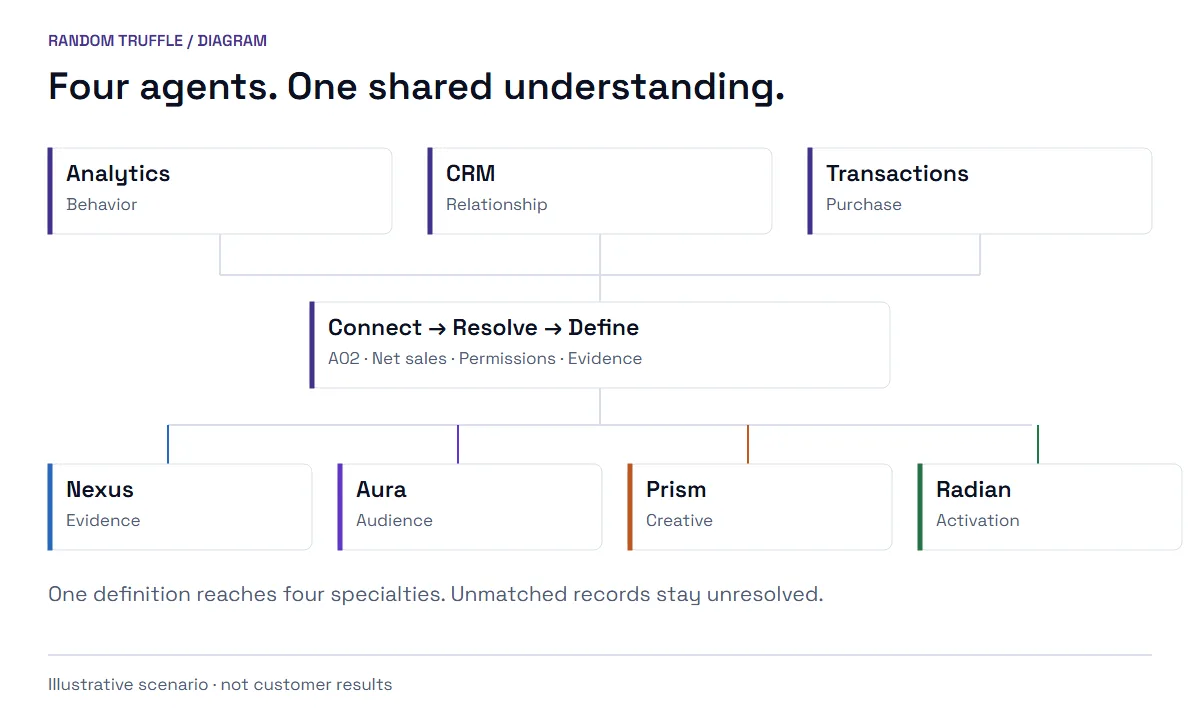 AI & marketing / 8 MIN READ
Connect advertising and customer context
Connect advertising signals and customer relationships while preserving their different permissions, identities and measurement limits.
Read the field note →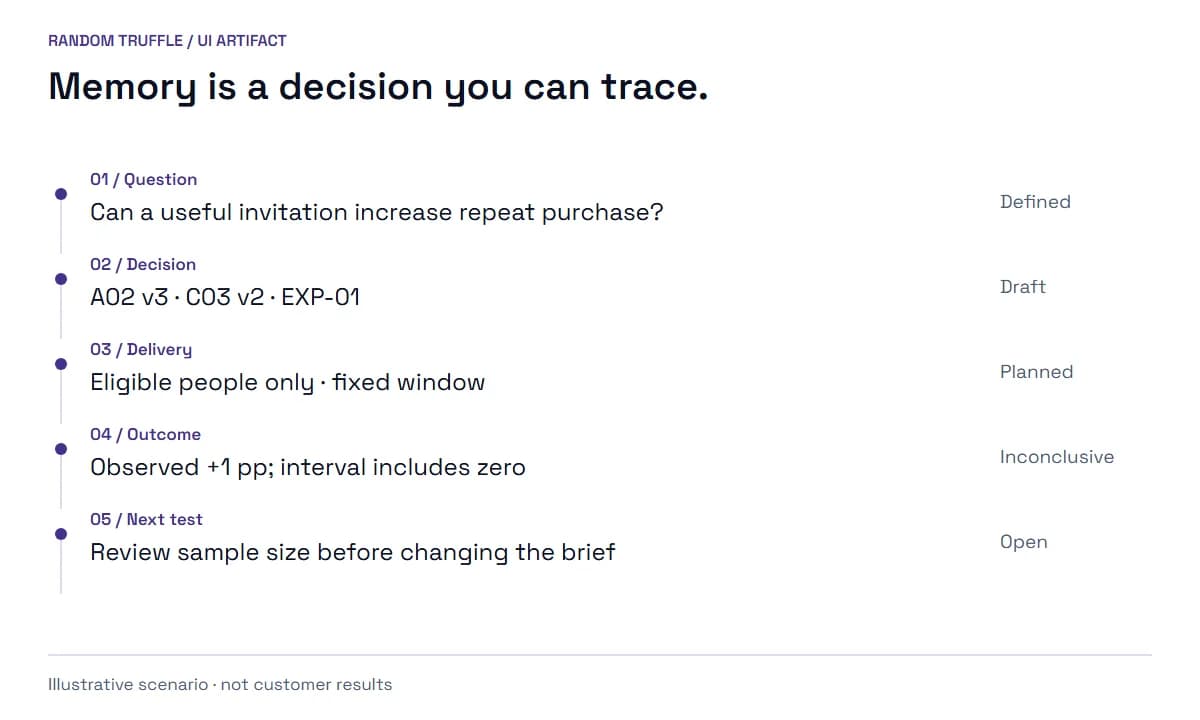 Engineering / 6 MIN READ
What it takes to operate a marketing agent
A prototype is a beginning. Evaluate the data connections, permissions, testing and maintenance required to run it in a business workflow.
Read the field note →AI & marketing / 8 MIN READFrom a useful prompt to a working process
Define what an agent needs to know, which actions it may take and how its work will be reviewed.
Read the field note →AI & marketing / 5 MIN READWhat agents change in a marketing team
Use agents to reduce repetitive coordination while keeping people responsible for strategy, creative judgment and consequential decisions.
Read the field note →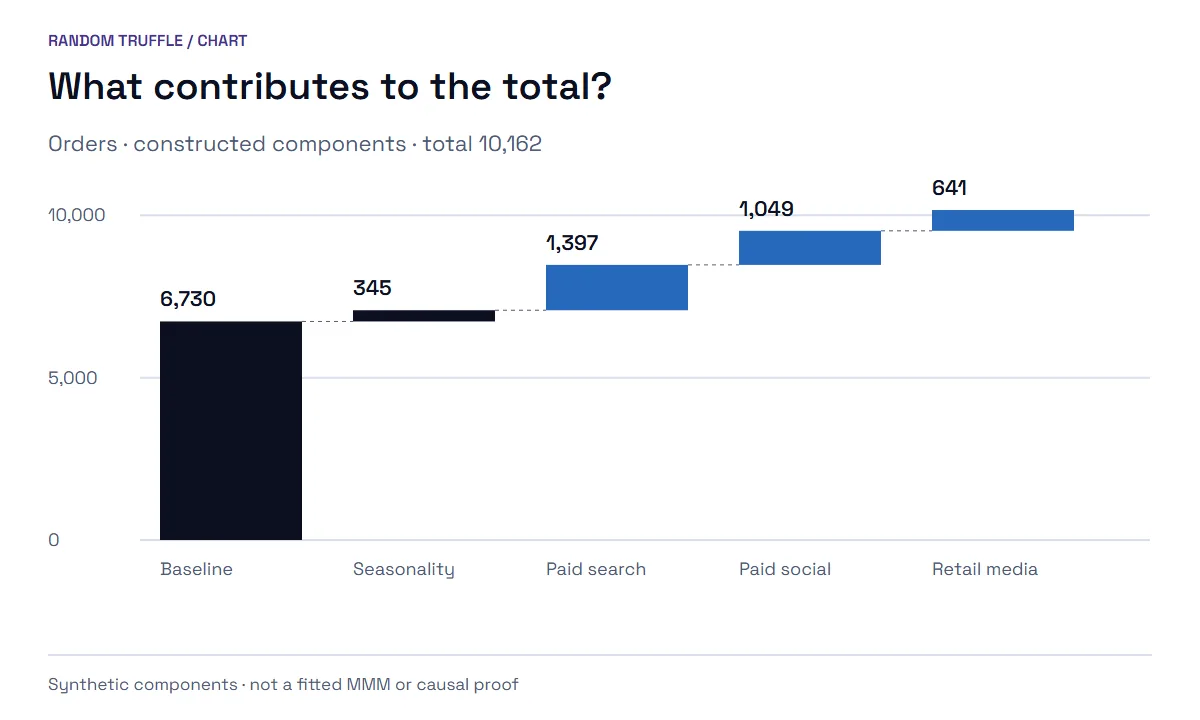 AI & marketing / 5 MIN READ
Make marketing mix models inspectable
Inspect the inputs, assumptions, calibration and uncertainty behind a budget recommendation.
Read the field note →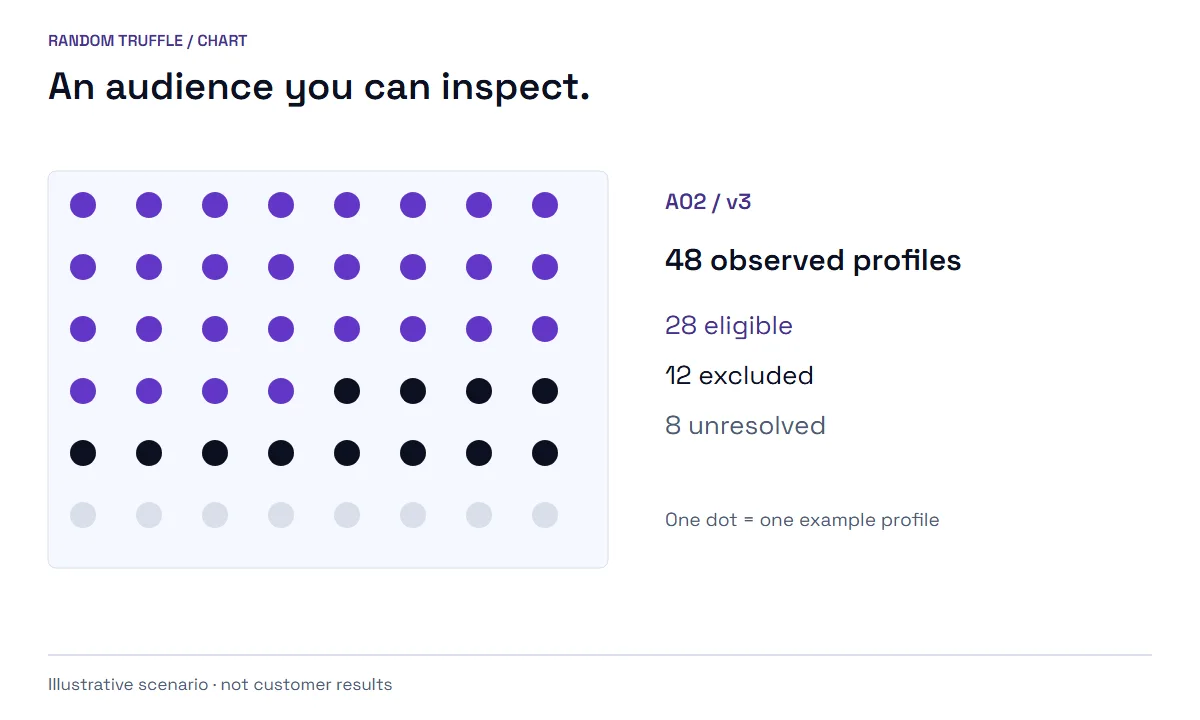 Cloud data / 5 MIN READ
Build predictive audiences with a clear test
Use predicted behavior to form an audience hypothesis, then test whether the intervention changes the outcome.
Read the field note →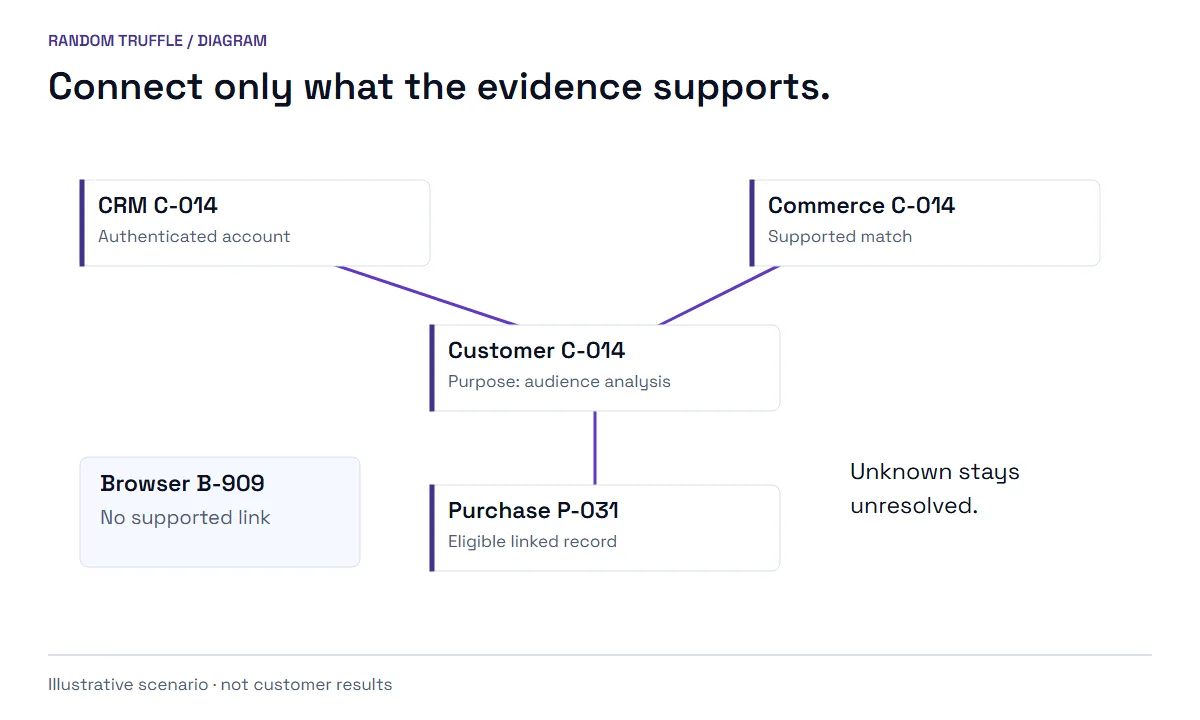 Engineering / 5 MIN READ
The business context behind a useful agent
Connect identity, business definitions and decision history so agents can work from inspectable context.
Read the field note →AI & marketing / 5 MIN READAsk business questions. Inspect the evidence.
Make business data easier to explore through conversation, with definitions, sources and unresolved questions visible.
Read the field note →Audience intelligence / 5 MIN READOne audience strategy. Specific activation.
Carry the strategy across channels while respecting each destination's eligibility, supported methods and reporting context.
Read the field note →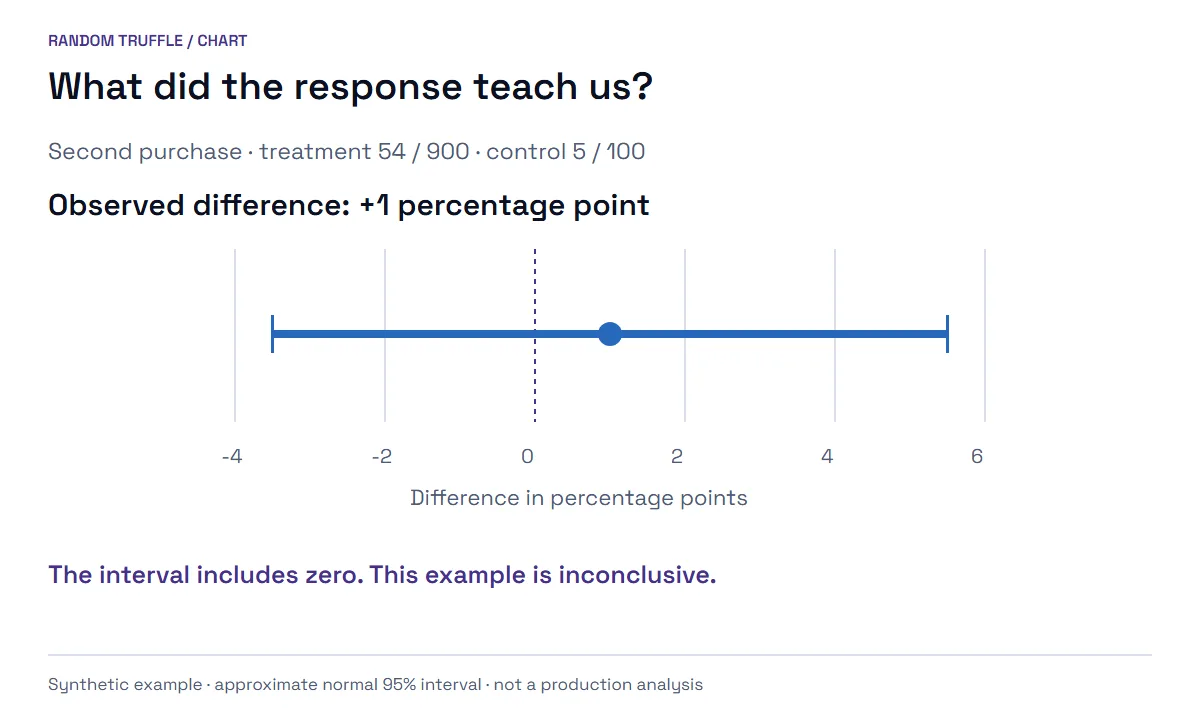 Measurement / 5 MIN READ
What would have happened without the campaign?
Define a credible comparison, inspect uncertainty and distinguish incremental effect from attribution credit.
Read the field note →Show the reasoning.
Keep the limits.
We use these notes to make the reasoning behind the product tangible: how an audience is defined, what a chart can support and what a creative handoff should preserve.
Examples are named as examples. External technical references are linked where used. Hypotheses remain distinguishable from observations, and uncertainty remains part of the answer.
See the foundation behind the approach →