
What it takes to operate a marketing agent
A prototype is a beginning. Evaluate the data connections, permissions, testing and maintenance required to run it in a business workflow.
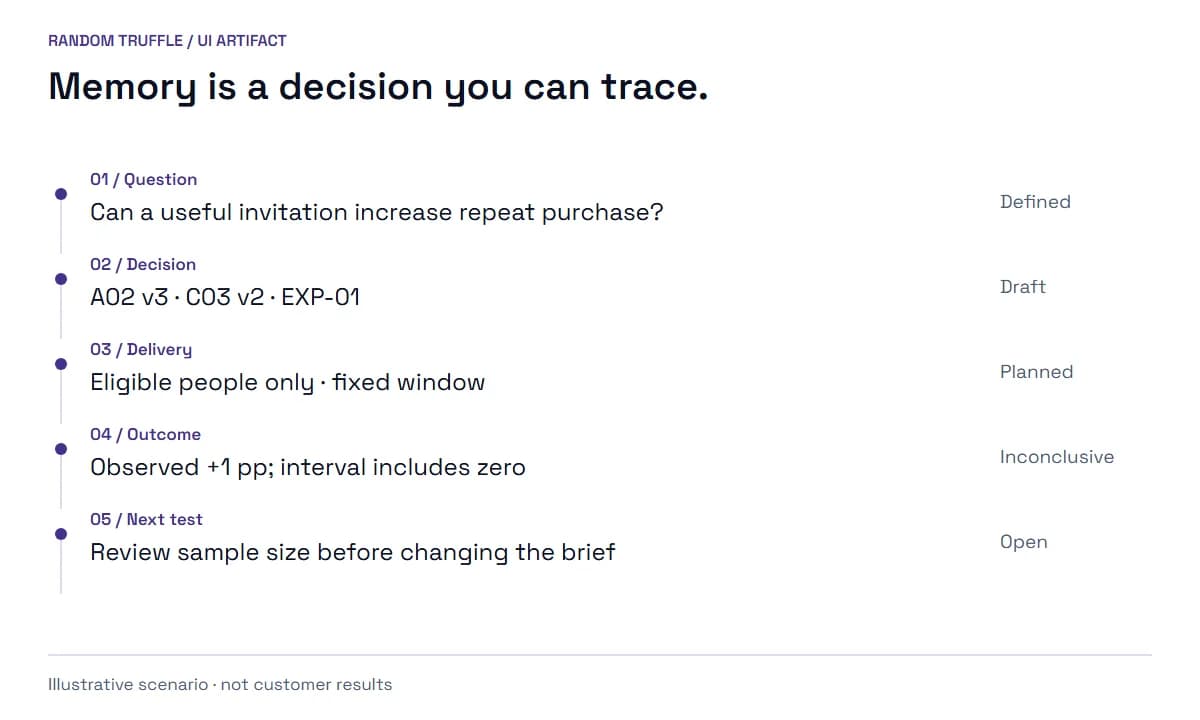
There used to be a very thick, very expensive wall between a creative idea and its execution in software.
If you were a marketer, a strategist, or an analyst with a brilliant idea for a customer tool, you had two choices: learn the esoteric syntax of programming languages (a multi-year journey involving semicolons and tears), or hire a team of developers and wait six months. The power was locked behind the gate of syntax.
But recently, something shifted. We are witnessing a fundamental change in how software is built and how assets are generated. The technical barrier is dissolving, replaced by a new philosophy that the internet has somewhat jokingly dubbed "Vibe Coding."
Don't let the casual name fool you. This isn't about lazy development. It is the transition from manual, syntax-heavy labor to natural language orchestration. It is the shift from art—where we rely on the intuition of a single creator—to science, where we treat creativity as a scalable, code-based process.
For the modern marketing engineer, this is the moment we've been waiting for. But there is a catch: Scaling this "vibe" from a freelancer's laptop to an enterprise organization is incredibly dangerous if you don't have the right infrastructure.
Here is how the methodology works, and why we built Random Truffle to handle the heavy lifting for you.
The New Playbook: How "Vibe Coding" Actually Works
To understand where marketing is going, you have to understand how the most advanced engineers are working right now. They aren't just typing prompts into a chatbot. They are building systems.
1. From Syntax to "Skills" (Modular Context)
The old way of using AI was exhausting: open a chat, type a massive prompt, get a mediocre result, repeat.
The new way relies on Modular Context. Think of these as permanent "instruction manuals" or "skills" that you plug into the AI. The Brand Voice File: a permanent set of rules about tone and forbidden words. The Design System: strict constraints on color palettes and spacing.
Instead of retraining the model every session, you "download your brain" into the system. The AI stops being a generalist and becomes a specialist that remembers your rules perfectly.
2. Agentic Orchestration ("The Manager")
We have all stared at a project and felt the paralysis of the mid-point. You've built the landing page, but now what?
The solution is Agentic Orchestration. This involves having a "Manager Agent" that doesn't write code or copy, but simply analyzes the project state. It looks at your files and says, "You have the frontend built, but no database connection. Your next step is to generate the API."
You become the Director; the Agent becomes the Producer.
3. The Stack: Research First, Create Second
One of the biggest mistakes we see is the "Do It All at Once" prompt.
State-of-the-art results come from Sequential Workflow Stacking: a Deep Research Agent scrapes data and finds the "white space" in the market. A Strategy Agent defines the positioning based on that data. A Creative Agent generates the assets only after the strategy is set.
This prevents "AI Slop"—generic content that feels like it was written by a machine.
The Enterprise Paradox: "Cool Demo, But Is It Safe?"
If you are a solo developer or a freelancer, you can run this entire "Vibe Coding" workflow on your laptop using text files and local scripts. It's fast, it's fun, and it's powerful.
But if you are a CMO or a Data Lead at a Fortune 500 company, this workflow is a nightmare.
You cannot have your marketing strategy living in loose markdown files on an employee's desktop. You cannot have "Agentic Orchestration" running on unverified, insecure servers. You cannot have "Deep Research" agents scraping the web without compliance guardrails.
This is the Build vs. Buy trap.
Companies see the power of agentic marketing and think, "We should hire a team of engineers to build our own internal Vibe Coding platform."
Building it means taking on security reviews, context window management, cloud infrastructure costs, testing and ongoing maintenance before it can run in a business workflow.
Enter Random Truffle: The Infrastructure for Intelligence
We built Random Truffle because we saw this shift coming. We realized that Enterprise Marketing doesn't need more "tools"—it needs an Agentic System with the data connections, permissions and testing a business workflow requires.
We effectively took the "Vibe Coding" principles—modularity, orchestration, and sequential stacking—and hardened them for the Enterprise.
1. We Productized the "Modular Context"
Remember those "Instruction Manuals" I mentioned? In Random Truffle, that's just how our memory works. You don't need to manage text files. Our system ingests your brand guidelines, your historical performance data, and your compliance rules, securing them in a unified "Brain" that every agent references.
The Result: You don't prompt the system to "be on brand." It is the brand.
2. Orchestration is Built-In
You don't need to be a prompt engineer to manage the workflow. Random Truffle's agents (like Nexus for strategy or Aura for creative) are already orchestrated.
We built the "Manager Agent" into the core platform. It automatically knows that Strategy must happen before Copy, and Compliance must happen before Publishing. It flows data from one agent to the next without you needing to write a single line of glue code.
3. Security as a Feature, Not an Afterthought
The "Vibe Coding" world is the Wild West. Random Truffle is the bank vault. We built this system on top of enterprise-grade cloud architecture. We handle the PII redaction, the security compliance, and the scalability.
You get the speed of an AI hacker with the safety of a bank.
The Takeaway: Don't Build the Factory, Just Make the Cars
The rise of Vibe Coding proves one thing: The barrier to prototyping software and complex marketing systems has dropped.
But just because you can build your own AI orchestration engine doesn't mean you should. Your job is to engineer marketing outcomes—higher ROAS, better retention, smarter creative.
Your job is the "Vibe."
Our job is the "Code."
Random Truffle is the engine that lets you execute these advanced, agentic workflows today—securely, compliantly, and at a scale that a text file on a laptop could never dream of.
Ready to stop prompting and start orchestrating? Let's talk.
Four agents. One shared understanding.
Explore how Nexus, Aura, Prism and Radian turn a question into evidence, creative and action.
Meet the agents →Keep exploring.
 Engineering / 5 MIN READ
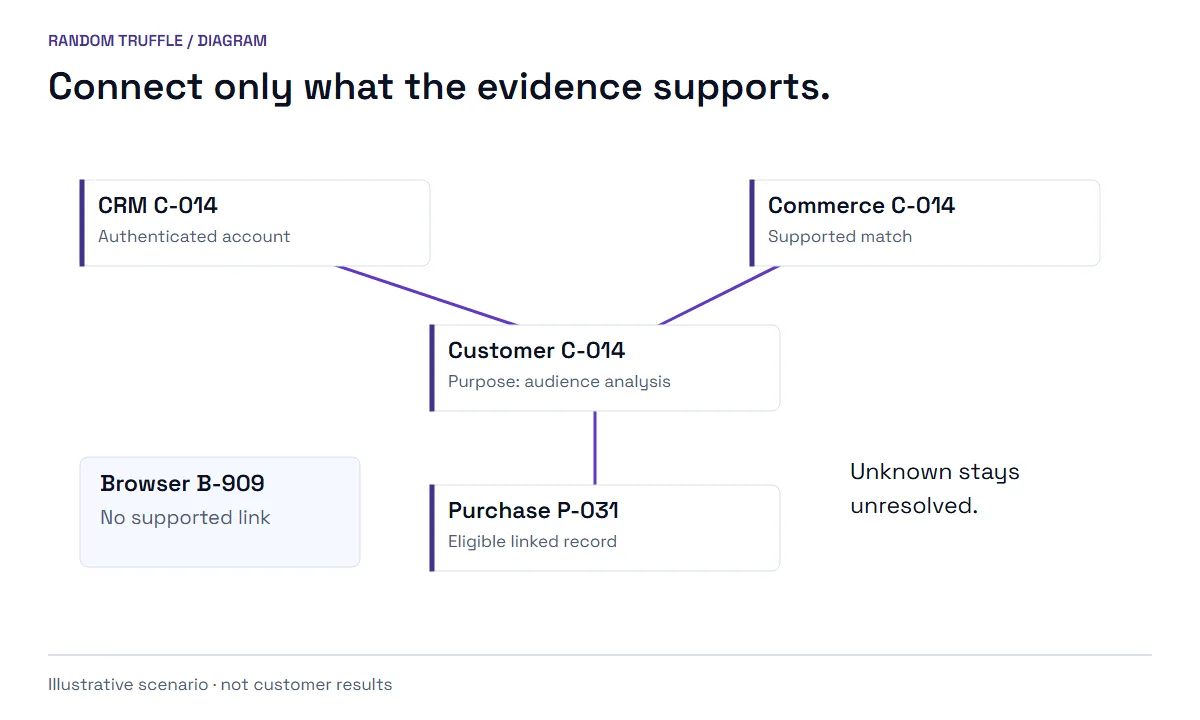
The business context behind a useful agent
Connect identity, business definitions and decision history so agents can work from inspectable context.
Read the field note →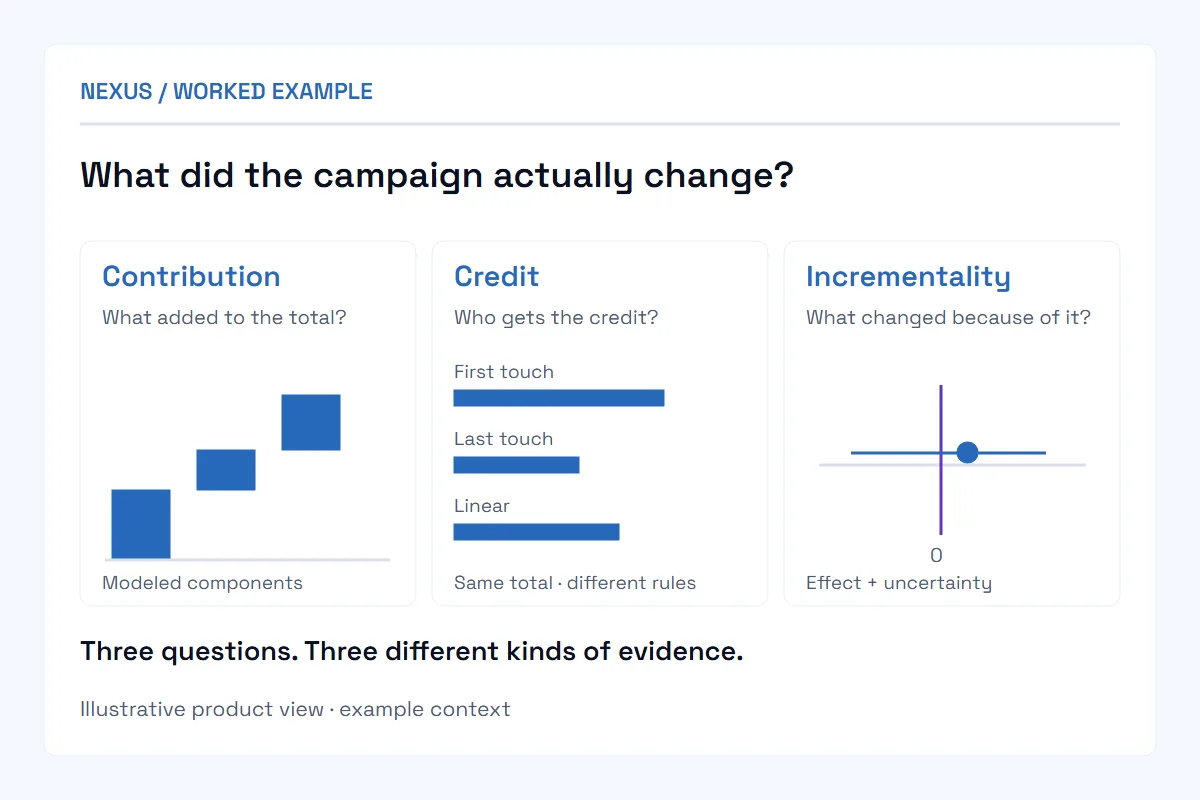 Measurement / 4 MIN READ
Contribution, credit and incrementality are different questions.
Why three useful measurement views should not collapse into a single performance number.
Read the field note →