
The creative handoff should remember the audience.
How to keep the reason for a campaign intact as an idea becomes images, video, display and delivery.
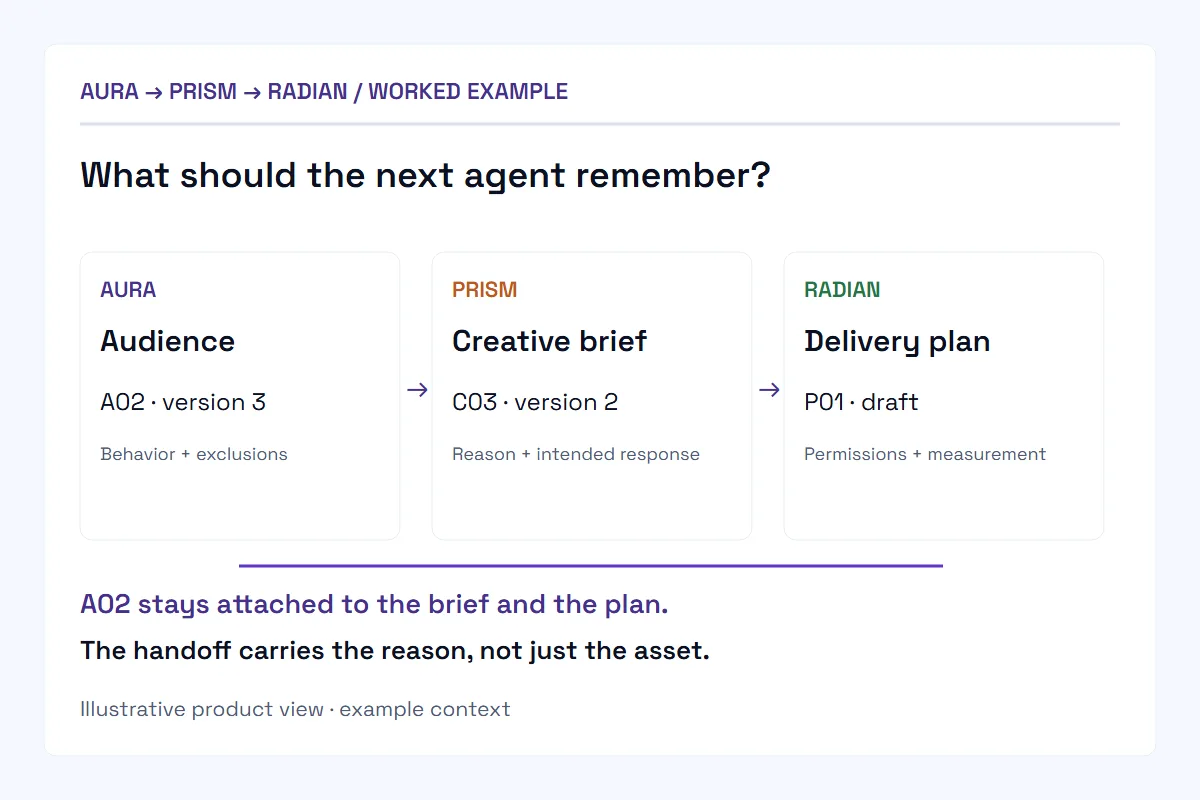
A creative handoff should carry the reason for the campaign along with the assets: the audience hypothesis, the intended response, what must stay constant across formats and what the experiment can teach. That memory is what makes the result interpretable later.
Key takeaways
- Keep the motivation in the working record, next to the files.
- Start the brief from a versioned audience hypothesis and its evidence.
- Separate the idea, which must remain, from the format, which can change.
- Decide what the experiment holds constant and its primary outcome before delivery.
The missing part of the handoff
A folder of finished assets explains what was made. It rarely explains why. When an idea moves from audience analysis to creative production and then to advertising operations, the motivation can disappear behind filenames and placement specifications. Our design principle is to keep that motivation in the working record, alongside the files.
Give the brief a traceable beginning
Start with a versioned audience hypothesis and the evidence that made it worth exploring. In our beverage example, the occasion is an outdoor pause. That is creative context, not a verified truth about everyone in a category. State the intended response, the product facts and the unknowns. If the campaign later changes its promise or occasion, record the change rather than treating every version as the same test.
Separate the idea from the format
An image, a display banner and a short video can express the same idea differently. A useful production brief identifies what must remain: the occasion, the product claim and the invitation. It also identifies what can change: crop, sequence, hierarchy and message length.
A video concept needs a progression, not simply a still image marked “video.” In our example, the storyboard lays out an opening, an experience and a closing invitation before anything is rendered.
Define what the experiment can teach
If you change audience, offer, format and message at once, the resulting comparison addresses a campaign package. That may be the right business question. It is not the same as isolating the effect of a headline. Decide what will be held constant before delivery and write the primary outcome down. Keep timing, eligibility and exclusions attached to the plan so later interpretation has a clear basis.
Prepare the operational context
Radian’s draft should inherit the selected asset version, audience definition, spend limit and required checks. A retail placement also needs a suitable product and buying context. An owned-channel invitation needs the appropriate permission and suppression logic. Those are part of the handoff, not assumptions hidden behind a launch button.
Return more than a winning asset
When a response arrives, retain its observation window, comparison and limitations. A creative with more clicks is not automatically the best expression of the business objective. Feed the result back to the audience hypothesis and the next brief. The durable output is a better understanding of what to try next, with enough memory to explain why.
Common questions
What should a creative brief include?
The versioned audience hypothesis and its evidence, the intended response, the product facts, the unknowns, and what must remain constant across formats.
Why separate the idea from the format?
Because an image, a banner and a short video express the same idea differently. Naming what must remain and what can change lets each format adapt without losing the reason for the campaign.
Is the creative with more clicks the winner?
Not automatically. Clicks are one signal. Judge the result against the business objective, the comparison it was measured against and its observation window.
Make the question concrete.
Inspect the worked example and its assumptions in the agent conversation.
Open the Prism conversation →Keep exploring.
 Measurement / 4 MIN READ
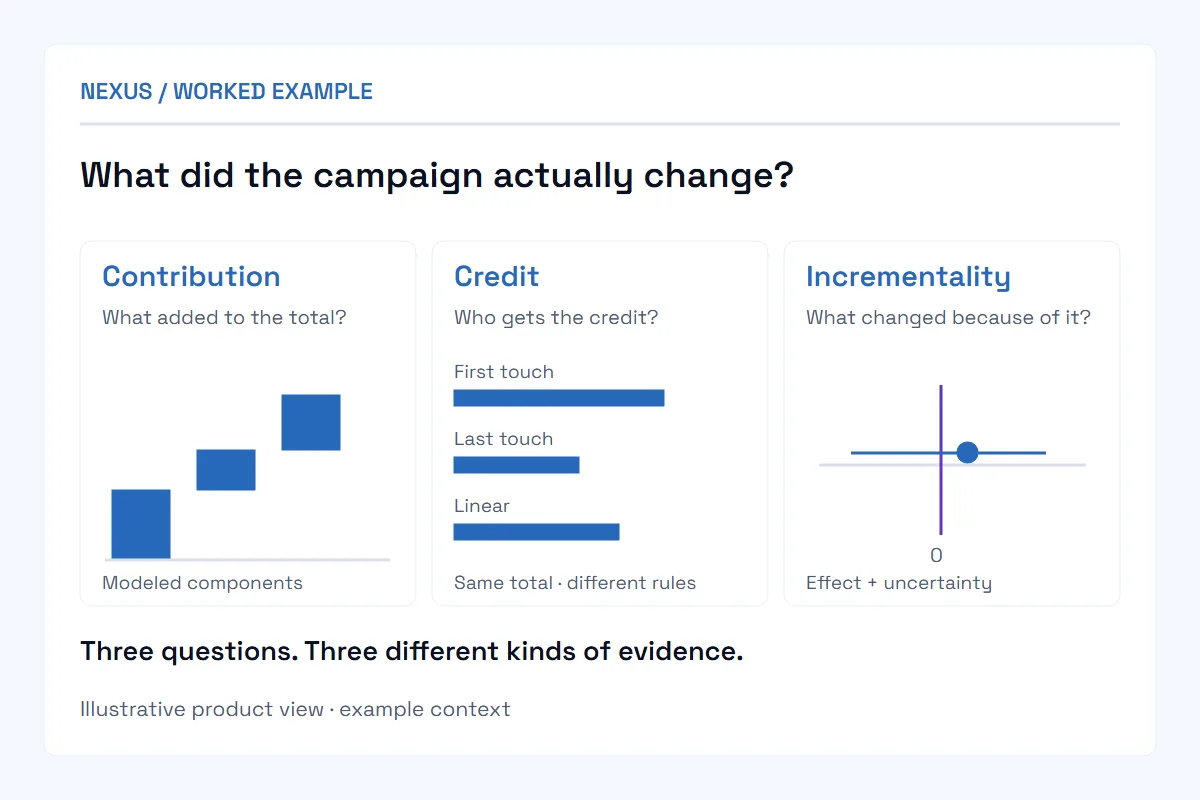
Contribution, credit and incrementality are different questions.
Why three useful measurement views should not collapse into a single performance number.
Read the field note →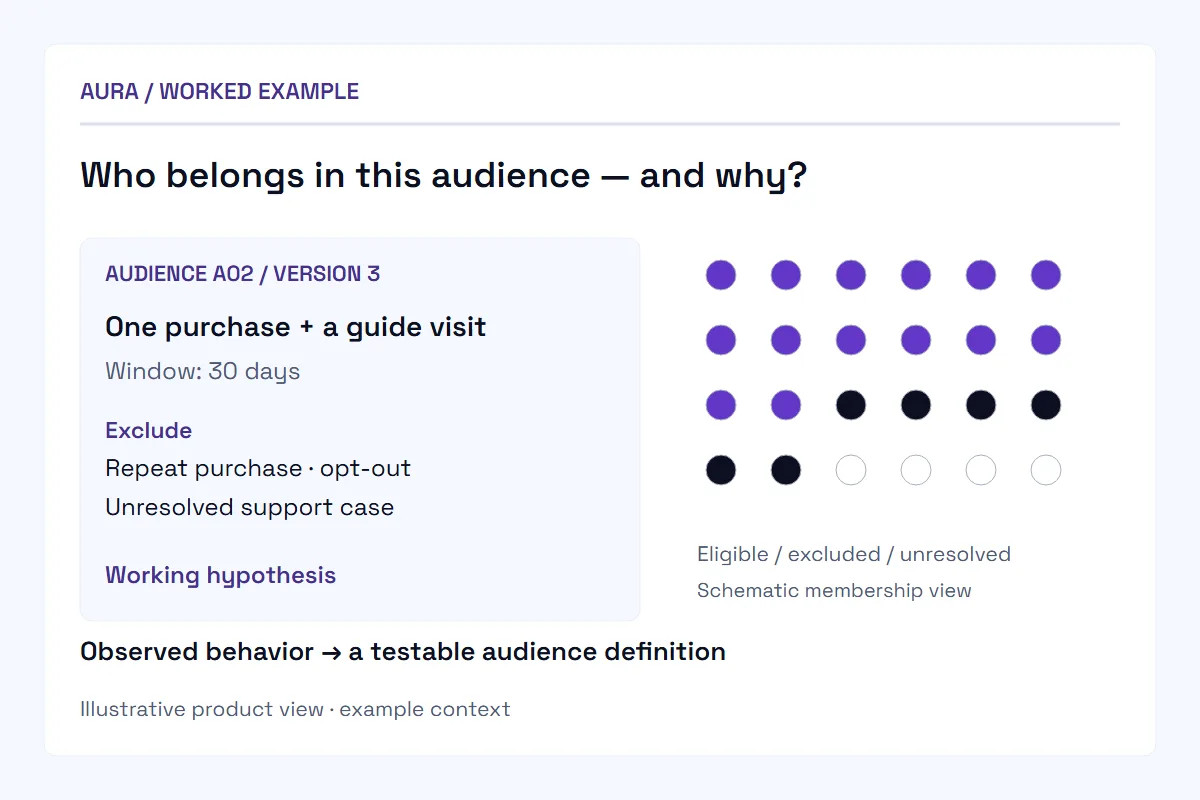 Audience intelligence / 4 MIN READ
An audience is a hypothesis, not a label.
A practical way to connect behavior, context and the next question—without pretending a segment explains a person.
Read the field note →